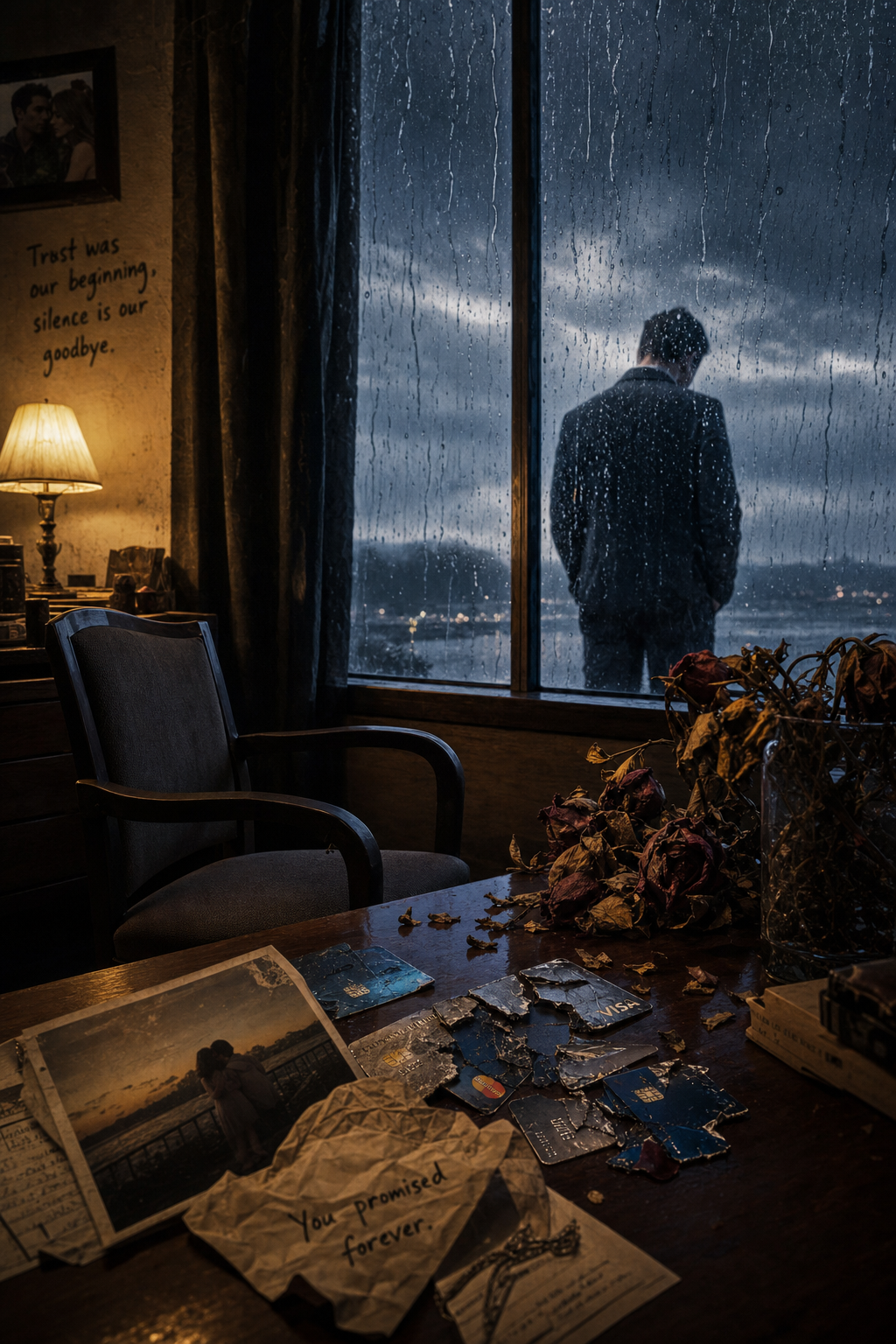
“He had no legal way to contact you,” he said. “But he may have convinced someone to deliver this. He has influence. People like him often do.”
That night, fear kept me awake. I lay on the couch listening to the house settle. Every noise felt heavy, sharp, too close.
Just after three in the morning, I stepped onto the balcony for air. The street was still. Too still.
The same black sedan was parked across from the house.

My breath caught. I stood frozen. The driver’s door opened. A man stepped out. Tall. Hooded. He did not look directly at me, but he lingered too long beside the car.
I backed into the house and locked the door. My fingers trembled as I called Harper. He arrived with officers, but the sedan was gone by the time they reached the street.
“We will track the vehicle,” he said. “This is not paranoia. It is a response to danger you lived through.”
Two days later, investigators traced the sedan to one of Silas’s former colleagues. The man insisted he only delivered the note because Silas told him his wife needed reassurance. The phrase “emotionally fragile” made my blood run cold.
Hearing that broke something in me, but not in the way it once did.
It broke the last thread of his influence.
Silas had spent years weaving a world where he understood me better than I understood myself. But that world shattered the night I saw him hunched over vials, humming like he was organizing his workshop.
Standing outside the police station after submitting my final statement, sunlight warming my face, I felt the weight lift.
For the first time in a long time, I understood something he never expected me to learn. I know myself. Truly. Fully. Undeniably. And he no longer frightens me.