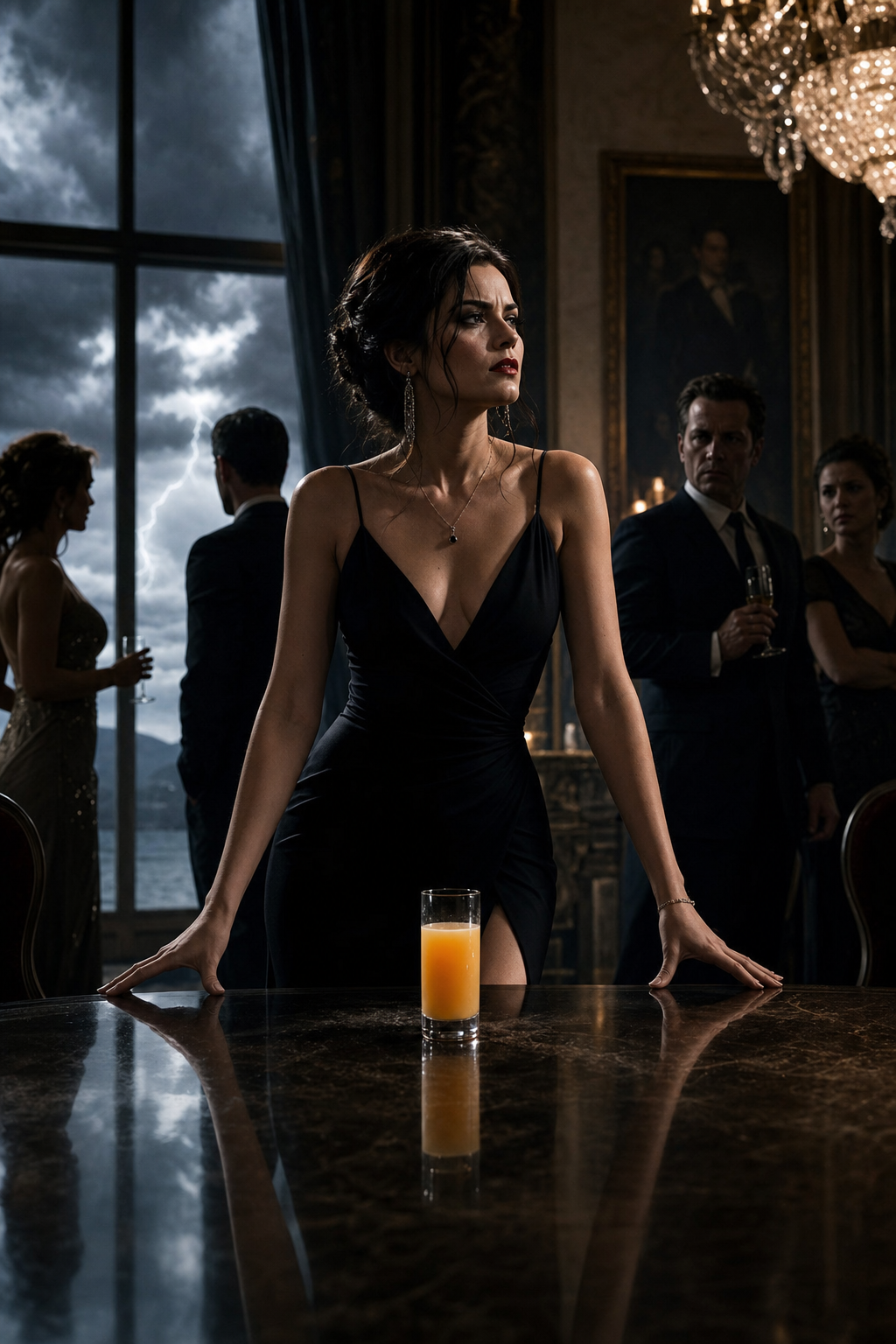
Victor’s smirk faded first. He set his glass down without realizing. The assistants stopped whispering. Phones lowered one by one.
Mia’s eyes were closed now. She wasn’t playing for them anymore. She played for the father who used to hum this tune while cooking dinner, for the mother who danced badly in the living room to make her laugh. She played for the girl she used to be, running barefoot across grass she could no longer feel.
Tears slipped down her cheeks, but her bow never wavered.
When the final note lingered in the air—pure, aching, perfect—the silence stretched for a full ten seconds. Then applause exploded, standing ovation, people wiping their eyes, some openly sobbing.
Victor stood frozen.
Mia lowered the violin. She looked straight at him.
“I don’t want to be adopted,” she said, voice small but steady, amplified by the microphone someone had forgotten to turn off. “I just wanted someone to listen. Really listen. Not because I’m in a wheelchair. Not because you feel sorry for me. Just… listen.”
She paused.
“You said you’d adopt me if I was good enough. But I’m already enough. And I’m not for sale.”
Victor opened his mouth. Nothing came out.
Mia wheeled back to her spot. Her foster mother knelt, wrapped arms around her, whispering proud words into her hair.
Victor didn’t speak for the rest of the night. He left early, alone, the echo of those notes still ringing in his ears.
Days later, a quiet donation arrived at the orphanage—enough to fund music therapy for every child, instruments, teachers, no strings attached. No press release. No photo op.
And in the envelope was a single handwritten note:
“I’m sorry I didn’t listen the first time. Thank you for teaching me how. —Victor”
Mia read it, folded it carefully, and placed it inside her violin case—right next to the old photograph of her parents.
She picked up her bow again.
And played.