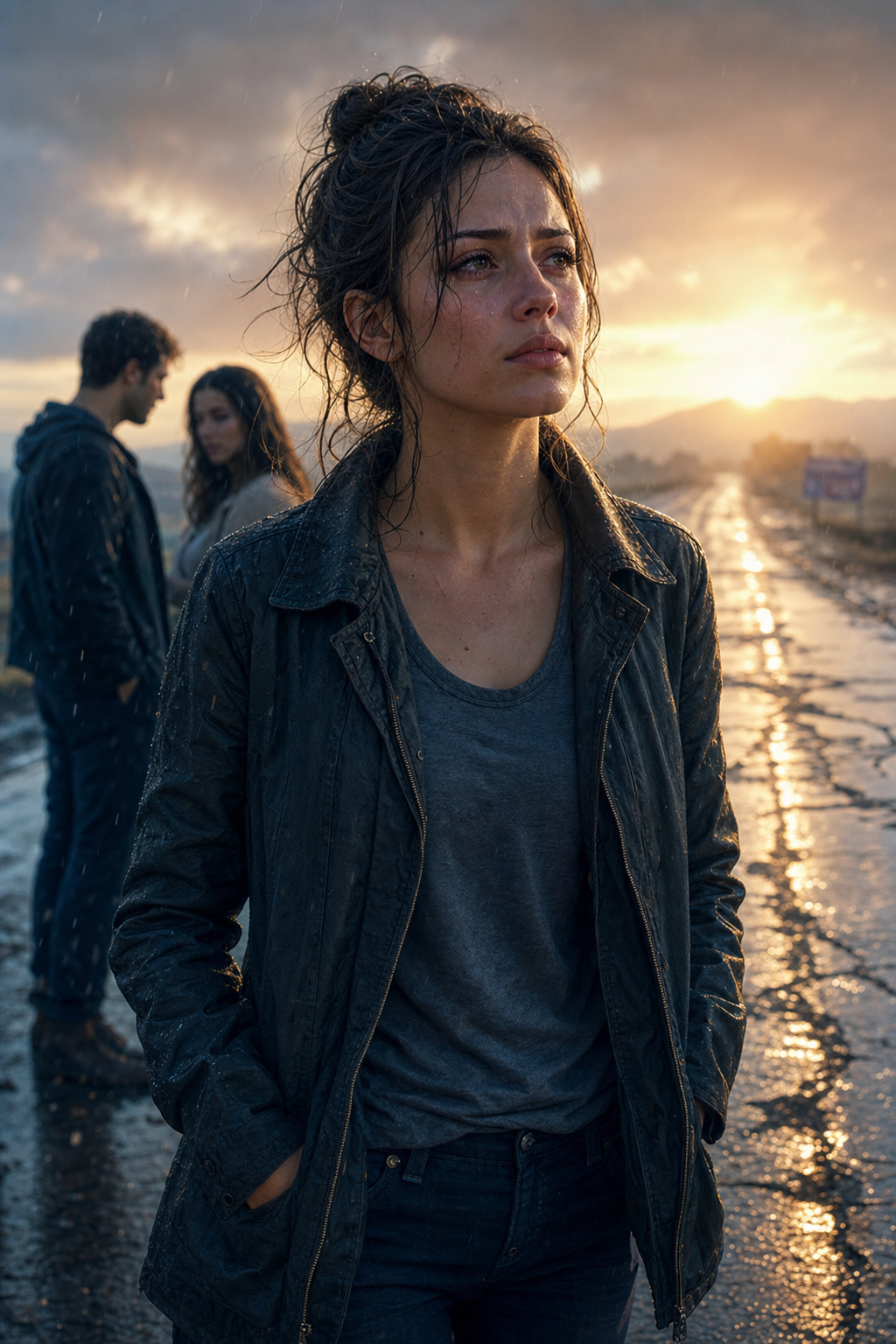
“It’s real,” Eva insisted. “Call the orphanage. Sister Helen knows.”
On speaker, the nun described a stormy night, a baby left in a basket, wrapped in a grease-stained leather jacket. A limping man fleeing in an old truck, crying, “Forgive me, God.”
“If Eva is alive,” Richard said darkly, “someone lied.”
At 3 a.m., the call came.

“Ninety-nine point nine percent,” Dr. Brooks said. “She’s your daughter.”
Eva collapsed. Richard dropped to his knees.
“You’re alive,” he sobbed. “My miracle.”
“Dad,” she whispered, the word unfamiliar but real.
The peace shattered quickly. A threatening message arrived. Richard hired Detective Frank Dawson, who uncovered the truth: the crash wasn’t an accident. A drifter named Caleb Roe, injured and guilt-ridden, had hidden the baby to protect her.
At an abandoned grain silo, gunfire erupted. Eva ran through dark tunnels, the necklace pressed to her chest. Richard shielded her.
“I’m not losing you again!”
They found Caleb—old, broken, remorseful. “Your mother fought to save you,” he cried. “They pushed the car. Black trucks. No plates.”
They barely escaped. Later, they discovered a tracker—someone close had betrayed them.
Richard stepped forward that night. “Mark Sullivan. I know it’s you.”
Mark emerged, gun raised. “Business, Richard. No heir meant everything for me.”
Before he could fire, federal agents swarmed in. Detective Dawson arrested him.
Days later, Mark was exposed. Arrests followed. Empires fell.
At the cemetery, Eva knelt by her mother’s grave.
“Hi, Mom,” she whispered. “They say you wanted to name me Caroline. I’m still deciding. But I came back.”
“I’m sorry,” Richard said quietly. “For being late.”
“Don’t buy my life,” Eva replied. “Walk with me while I build it.”
He nodded.
She asked for one thing—a fund for abandoned children and struggling mothers. Richard signed without hesitation. Caleb was given a home, a garden, and peace.
As the city lights glowed, Eva held the necklace close. It no longer represented loss—but survival.
Richard sat beside her.
“We arrived late,” he said.
“But we arrived,” she answered.
For the first time, “family” felt real.
It felt like home.