Ethan Castillo’s estate outside Barcelona was the kind of place where Spain’s elite gathered without being invited twice.
At forty-two, widowed, and the head of a hotel empire worth half a billion, Ethan was widely seen as the most desirable bachelor in the country. Women chased him.
His family paraded models, heiresses, and aristocrats through his life. But his seven-year-old twin daughters, Lily and Mia, had already chosen the woman they wanted as their new mother—and no one approved of their choice.
Her name was Hannah Brooks. She was thirty-four, an elementary school teacher, and, by fashion-industry standards, about twenty pounds heavier than she was “supposed” to be.
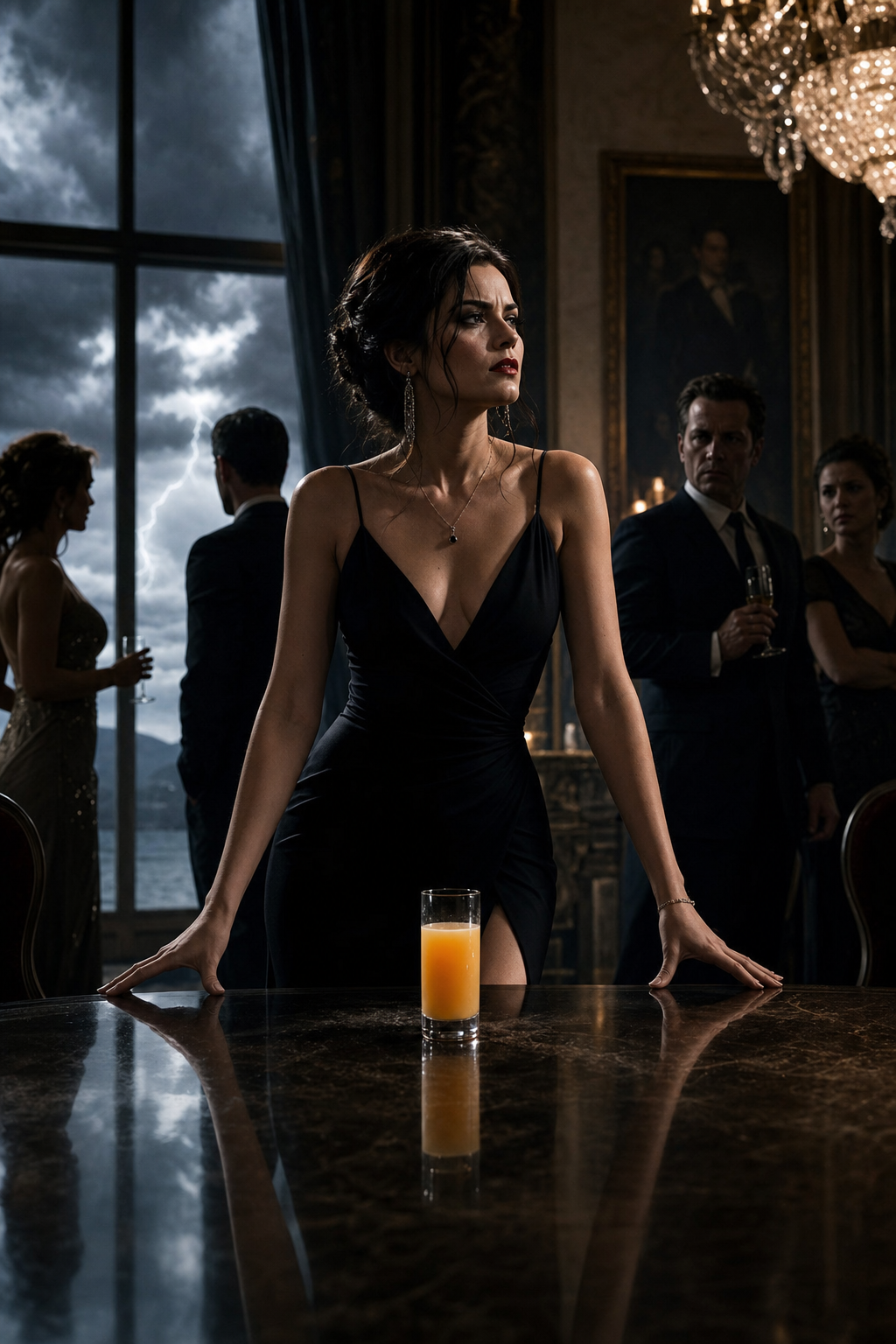
So when the twins pointed to her during an exclusive garden party and shouted, “We want her, Daddy,” the guests were horrified. The whispers started at once.
“She’s too heavy for someone like him.”
“She’s not from their world.”
“Those girls need a proper mother.”
What none of them understood was that Hannah had something none of those polished women possessed. Something that would change not only the twins’ lives, but also the life of their cold, wounded father. And the lesson that Barcelona society was about to learn was worth more than all of Ethan Castillo’s money.
The Castillo estate rose over the hills like an old European palace—stone walls, sprawling gardens, wide terraces, and the sort of grandeur that made everything feel carefully inherited.
Ethan had received not only the estate, but the hotel company his grandfather had built decades earlier.
On the outside, he looked like a man who had everything. Tall, dark-haired, touched with gray at the temples, athletic from discipline, dressed in expensive tailored clothes, a luxury watch at his wrist. But behind that polished image was a man still broken by grief.
His wife, Grace, had died in a car accident three years earlier, leaving him alone with their daughters, who had only been four. Since then, Ethan had built walls around his heart. Not because he thought it would erase the pain, but because he believed distance would protect his daughters from more disappointment.
He had made up his mind that if he ever remarried, it would not be for love. Love had already cost him too much. It would only be to give the girls a suitable mother figure.
So his family began searching for the “perfect” woman. His mother introduced him to daughters of old money. His sister arranged dinners with glamorous actresses and elegant socialites.
Business associates made sure attractive, well-bred women just happened to appear at the same events. Every one of them was beautiful, polished, and socially acceptable. None of them cared about the twins.
Lily and Mia were bright, sensitive girls who had lost their mother too soon. They remembered Grace only in fragments—her scent, her lullabies, the warmth of her lap.
In the years after her death, they watched woman after woman come through the estate.
They were smiled at, complimented, offered trips and treats, and then passed right back to nannies. No one asked what scared them at night. No one asked what they loved.
Hannah was their second-grade teacher at a private international school in Barcelona. She had grown up in a working-class neighborhood and was the first in her family to finish college. Her father had worked construction, her mother cleaned houses. She became a teacher because she loved children, not because it paid well.
She was soft and curvy, and she knew perfectly well how the world judged women like her. But she had also learned that her value had nothing to do with a dress size.
She noticed Lily and Mia on the first day of school—identical little girls with long brown braids, sad hazel eyes, and a silence that felt too heavy for children their age.
While the other students played loudly, they sat together reading or drawing. They were too polite, too guarded, too careful.
Hannah didn’t force anything. She started small: a kind comment about a drawing, a question about their weekend, a silly classroom story that finally made them laugh.
Bit by bit, they opened up. Soon they were hugging her every morning, whispering secrets to her at recess, calling her “Miss Hannah” with real affection.
She learned that Lily loved math but panicked at the thought of being wrong. She learned that Mia wrote poetry and hid it because she thought it was embarrassing.
She learned that both girls had nightmares about their mother calling to them from somewhere they could never reach.
Hannah never offered extravagant gifts or fantasy promises. She gave them something else: attention, patience, and the feeling that their emotions mattered.
Ethan had met Hannah only briefly during school meetings. He had thought she seemed competent and professional, but otherwise ordinary. She wore simple clothes, little makeup, and practical hairstyles. In his shallow first impression, she barely registered.
But his daughters saw what he did not. They saw a woman who looked them in the eye, remembered what they disliked, noticed what frightened them, cried at their school performances because she was sincerely proud of them, and held them in a way that felt safe. To them, she felt like home.
The garden party that changed everything had been arranged by Ethan’s mother to introduce him to Vanessa Sinclair, a beautiful, refined heiress from an influential family. Vanessa was exactly the type the Castillos admired—elegant, educated, graceful, and emotionally distant.
The estate was full of wealthy guests, designer clothes, expensive conversation, and polite performances. The twins had been dressed to match, their hair done perfectly, instructed to smile and behave. They hated every second of it. They knew these gatherings meant being displayed like dolls while strangers praised them without even knowing who they were.
When Vanessa was presented to Ethan in front of the crowd, guests reacted as if an engagement had already been announced. She knelt toward the twins with a polished smile and asked whether they weren’t lucky to be getting such a beautiful new mother.
Then Mia, usually the quieter one, looked straight at her and said, “You’re not like Miss Hannah. You don’t really love us.”
The garden fell silent.
Vanessa laughed awkwardly, trying to recover, but Lily found her courage too.
“Daddy,” she said loudly, “we want Miss Hannah to be our mom. She listens to us. She knows I’m scared of math and that Mia writes poetry. She hugs us when we’re sad. She really loves us.”
Then Mia shouted, “We want her, Daddy!”
The silence that followed was brutal. Then came the comments. Ethan’s mother said the girls were confused. An aunt muttered that children didn’t understand what was suitable. Others made cruel remarks about Hannah’s body, her class, her background. Vanessa smiled sweetly and suggested there was a difference between a teacher and a mother.
Ethan stood there frozen, staring at his daughters. In their eyes, for the first time in years, he saw hope.
Then the truth hit him hard: he didn’t really know his own children. He didn’t know Lily feared math. He didn’t know Mia wrote poems. He had been so focused on providing luxury, security, and order that he had missed their inner lives entirely. Yet they had found comfort in a woman he had barely noticed.
That night he sat alone in his study, unable to stop thinking about the look on their faces. The next day, instead of sending the driver, he took the girls to school himself and asked to meet Hannah.
When she came into the small meeting room, he truly saw her for the first time—not glamorous, not striking in the conventional sense, but warm, intelligent, and quietly strong. She expected anger, maybe even dismissal. Instead, Ethan asked her to tell him about his daughters.
So she did.
She told him how Lily froze because she wanted to be perfect. How Mia hid her talent because she feared she was not good enough. How both girls were carrying the invisible burden of being “the twins without a mother.” She told him she had spent months simply listening, giving them a place where they could be children instead of symbols of a tragic, wealthy family.
Every word struck him. Hannah knew his daughters better than he did.
When she finished, he surprised her again by asking her to dinner. Not to discuss the twins, he said, but because he wanted to know the person they loved so much.
Hannah hesitated. She warned him not to involve the girls unless he was sincere. If he was only curious for a moment, he had no right to awaken their hopes. That shook him more than anything. She was protecting his daughters from him.
At dinner, somewhere far from cameras and gossip, they began speaking honestly. Ethan told her about Grace and about the emptiness he had lived with since her death. Hannah told him about her modest upbringing, her work, her little apartment, and why teaching mattered to her. He was moved by her passion. She was moved by his vulnerability. Beneath the polished executive, she found a grieving father terrified of failing his children.
By the end of the night, Ethan asked to see her again—for himself. Hannah asked why. He answered truthfully: because she had made him feel more alive in a few hours than he had felt in years. Because she was real. Because maybe his daughters had seen something true before he did.
Their relationship quickly became the favorite target of society gossip. His family was appalled. Social media was vicious. People mocked Hannah’s body, her clothes, her background, and accused her of chasing his money. She cried more than once. But Ethan did not step back. For the first time in a long time, he felt present in his own life. Hannah made him laugh, challenged him, and cared about the girls in a way no one else ever had.
What changed him forever was seeing her with the twins during a tense family dinner. While his relatives sneered, Hannah quietly led the girls outside, sat in the grass with them without caring about her dress, and made them laugh again. Watching through the window, Ethan understood that she was worth more than society’s approval, more than family acceptance, more than appearances. She was worth everything.
Six months later, he proposed in a park where she often took the girls to play. No luxury spectacle. Just a picnic, the twins holding the ring, and a moment that felt honest. Hannah said yes—not because he was rich, but because she had fallen in love with the man beneath the image: the father who learned to make pancakes, who showed up to school plays, who defended her in public when it cost him status.
They married in two parts: a small private ceremony for the people who truly loved them, and a larger reception where Ethan gave a speech no one forgot. He admitted that for years he had chased perfection, thinking that beauty, status, and pedigree could make someone the right mother for his daughters. But his children had seen what he had missed: real love has no size, no bank balance, and no social rank. It has sincerity, devotion, and presence.
Five years later, the estate was no longer a polished museum. It was a loud, happy home. The twins, now twelve, ran through it laughing with their little sister, Rose. Hannah had continued teaching for years, refusing to become only “Ethan Castillo’s wife,” and he respected her all the more for it.
Lily grew into a math champion. Mia published a small book of poems. Both girls called Hannah Mom without hesitation, while speaking of Grace with love instead of crushing sorrow.
One night at dinner, Lily said she was grateful they had listened to their hearts that day at the garden party. If they had left the decision to the adults, they might have ended up with someone beautiful but cold. Instead, they got someone who truly loved them.
Mia added that Hannah had taught them the most important lesson of all: real beauty is not measured by a scale or a bank account, but by kindness, honesty, and the love you give without asking for anything in return.
Ethan held his wife close and silently thanked his daughters for having more wisdom at seven than he had possessed in a lifetime.
And whenever anyone later said Hannah was not the kind of woman a man like Ethan was expected to marry, the twins would smile and answer proudly, “Exactly. That’s why we chose her. Because she’s real.”