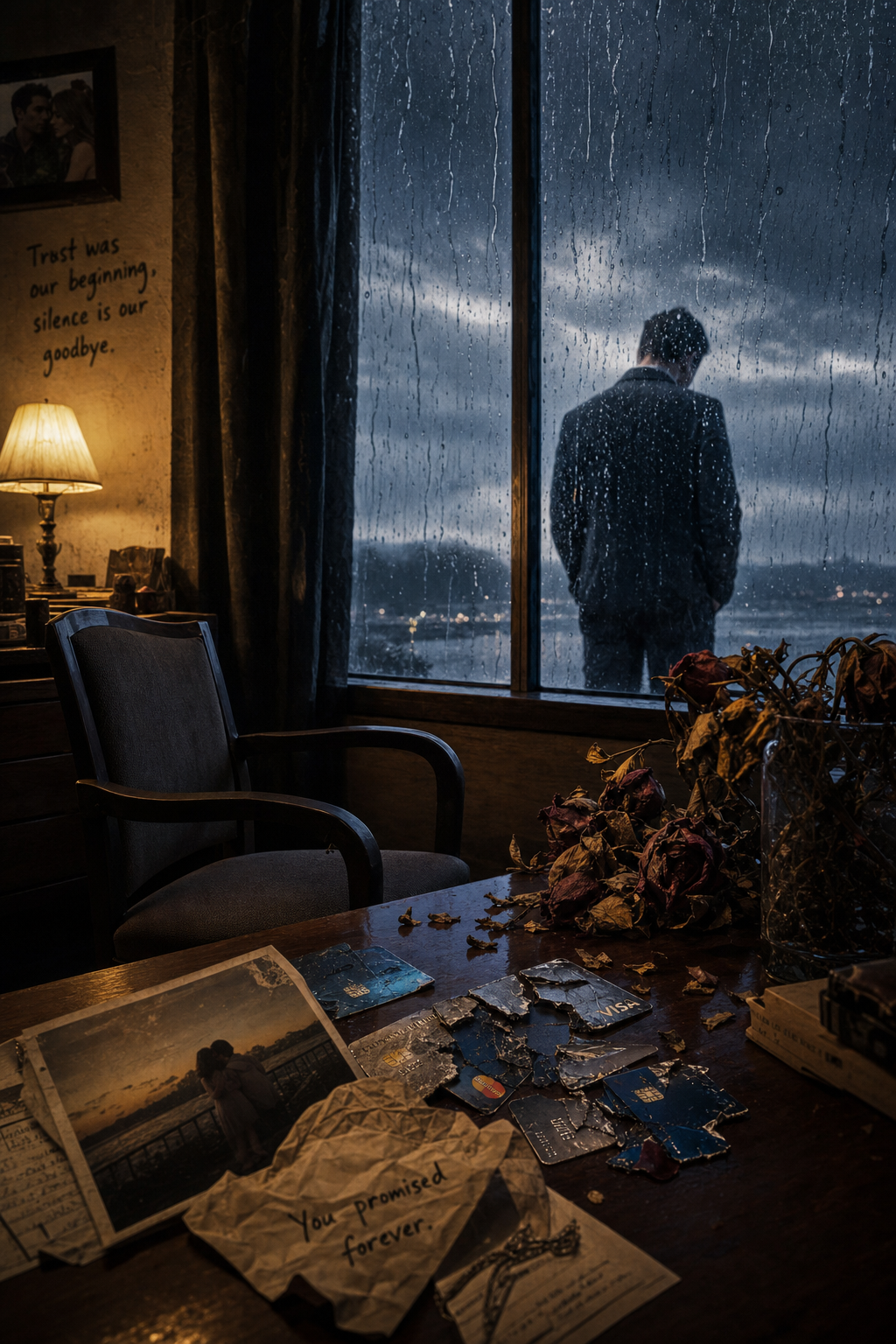
He called me within minutes after being served.
“What is this supposed to mean,” he demanded.
I stood by the window and said calmly, “It means I prepared before you acted, and now everything is documented.”
He responded, “You cannot prove anything, and you are overreacting.”
I replied, “I already have the proof, and you provided most of it yourself.”
The legal process unfolded quickly, with depositions, hearings, and asset tracing that revealed patterns he could not explain.
His attorneys attempted to question my mental stability, but my attorney submitted recordings that dismantled that narrative immediately.
During one hearing, Christopher’s lawyer said, “We are concerned about her erratic behavior and aggressive financial decisions.”
My attorney stood and responded, “We submit Exhibit A and Exhibit B,” and the courtroom filled with Christopher’s own words.
Afterward, Christopher asked to meet privately at a café downtown, and he looked exhausted in a way I had never seen before.
“I didn’t know you were capable of this,” he said quietly.
I stirred my tea and answered, “You never asked who I was when I was not standing beside you.”
He leaned forward and said, “I was afraid you would leave one day, so I tried to control the situation before it happened.”
“That is not love,” I replied gently. “That is fear disguised as strategy.”
Months later, the settlement was finalized, and I retained all of my pre marital companies while securing a fair division of shared assets.
He kept his remaining developments, although they were now under scrutiny from creditors and regulators.
When everything was signed, I walked out of the courthouse alone and felt something I had not felt in years.
Freedom.
I moved into a smaller apartment overlooking Puget Sound, and I returned to painting abstract seascapes that reminded me of a part of myself I had set aside.
I expanded my business into nonprofit art preservation, working with museums that needed protection for vulnerable collections.
One afternoon, Christopher sent a message.
“I’m sorry for everything, and I hope you are doing well.”
I read it carefully and then replied, “I am doing well, and I hope you learn from this.”
Because strength had never been about anger or destruction, and it had always been about preparation, clarity, and timing that allowed action to speak louder than any argument.