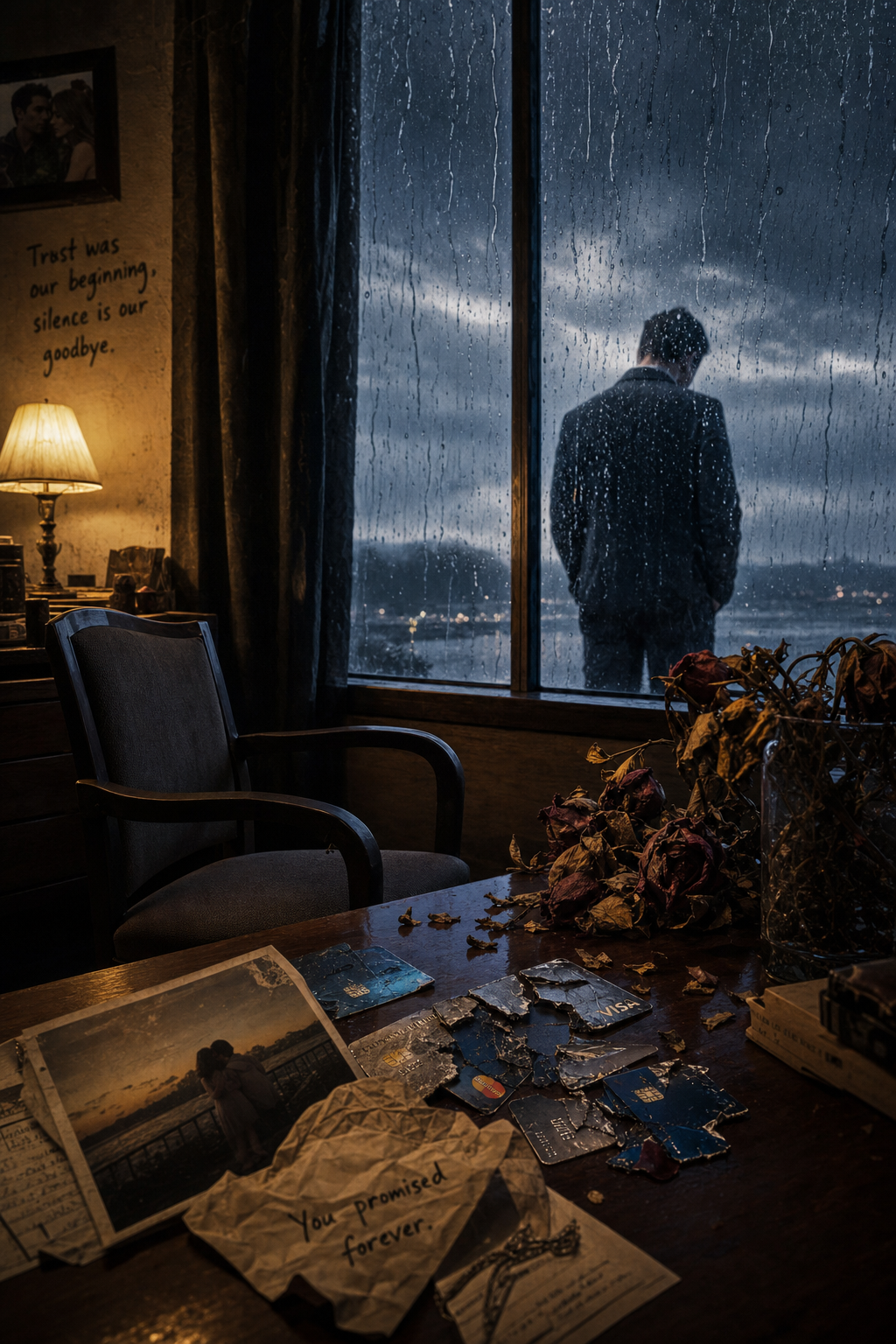
“If you go through with this, you will destroy both of us,” he said through clenched teeth.
I shook my head gently, feeling a strange sense of calm settle over me.
“No, Connor,” I said quietly. “Only one of us is going down.”
At that moment, the hospital door opened, and a nurse stepped inside, followed closely by a security officer. The shift in the room was immediate, and Connor turned toward them with confusion.
“Mr. Whitfield, we need you to come with us,” the officer said in a calm but firm tone.
Connor looked back at me as if he were seeing a completely different person for the first time.
“You did this?” he asked.
I met his gaze without hesitation.
“You asked me to sign something,” I said. “Now it is your turn.”
After he was escorted out of the room, silence filled the space around me, but it was not empty silence. It was the kind that follows something irreversible.
My heart pounded against my ribs, and I could feel it pulling at the stitches in my abdomen. The nurse adjusted my IV and looked at me with quiet concern.
“Are you safe?” she asked softly.
The word safe felt unfamiliar, almost distant, but I nodded anyway.
Over the following weeks, I began to rebuild my life piece by piece. I froze my credit, filed identity theft reports, and gathered medical records proving that I could not have signed certain documents.
Connor called repeatedly, leaving messages that shifted from anger to desperation, but I never answered any of them. Months later, the investigation continued, and the evidence spoke louder than any explanation he could offer.
He lost his lawyer, his credibility, and the illusion that he controlled everything.
Meanwhile, my body healed slowly, leaving behind a thin scar across my abdomen that reminded me of what I had given. I did not regret saving his life, but I regretted believing it would change who he was.
In the end, it was not the kidney that made me weak.
It was my silence.
And the moment I chose to stop being silent, everything finally changed.